Take two searches:
- "What are running shoes?"
- "Buy women's Brooks running shoes size 6 UK"
Both are about running shoes. But the first person is curious, perhaps just starting out. The second knows exactly what they want and has their card ready.
If you sell running shoes, which search would you rather rank for? Most businesses would say the second, yet many SEO strategies chase the first type of search simply because more people make it.
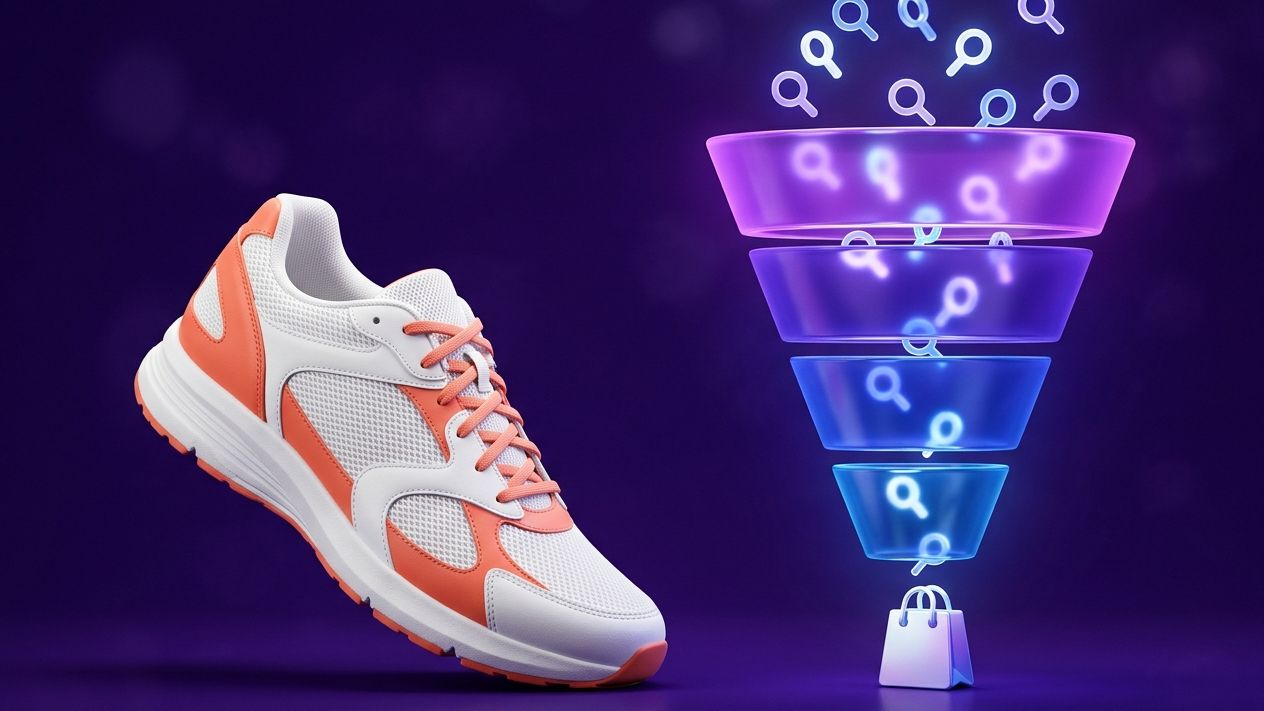
This is search intent: the reason behind a search. Understanding it is one of the most practical ways to make SEO and PPC bring in customers rather than just visitors.
What Is Search Intent?
Search intent is what someone is trying to achieve when they type a search. It's usually grouped into four categories:
- Informational: "I'm learning." The person wants to understand something.
- Commercial: "I'm comparing." They're weighing up options before deciding.
- Transactional: "I'm ready to buy." They want to purchase, book or enquire.
- Navigational: "I know where I want to go." They're looking for a specific brand or website.
From a consumer psychology point of view, these categories mirror the stages people go through when making a decision: becoming aware of a need, researching options, evaluating them and finally acting.
Informational Keywords: I'm Learning
Examples:
- What are running shoes?
- How long do running shoes last?
- Best running shoes for beginners
- How to choose running shoes
People making these searches are early in their journey. They're not ready to buy yet, but they are forming opinions about who knows what they're talking about.
Guides, how-to articles and explainers work well here. A running shop that publishes a genuinely useful guide on choosing running shoes builds trust early, so it's more likely to be remembered when the reader is ready to buy. "Best running shoes for beginners" sits on the border with commercial intent, which is why it often suits a guide with product recommendations.
Commercial Keywords: I'm Comparing
Examples:
- Brooks vs ASICS running shoes
- Best running shoes for half marathons
- Best women's running shoes under £120
- Nike Pegasus running shoes review
These searchers have narrowed their options and are deciding between them. They want help making the right choice.
Comparison articles, product guides, honest reviews and buying advice are the best fit. This is where expertise really matters. Practical, first-hand knowledge, such as how a shoe feels on longer runs, is far more persuasive than a list of specifications.
Transactional Keywords: I'm Ready to Buy
Examples:
- Buy Brooks Ghost running shoes UK
- ASICS Gel-Kayano size 6 in stock
- Women's running shoes next day delivery
- Running shoes sale UK
These searches show clear buying intent. People want to know where to buy, whether it's in stock, how quickly it will arrive and what it costs.
Well-optimised category and product pages are essential here: accurate product names, sizes, stock information, prices, delivery details and a smooth checkout. These searches are also often a strong fit for Google Ads and Shopping campaigns, because the searcher is ready to act.
Navigational Keywords: I Know Where I Want to Go
Examples:
- Brooks official website UK
- SportsShoes UK
- Nike running shoes
- Running Hub website
Navigational searches are made by people looking for a particular brand or retailer. If someone searches your business name, you should be the first result.
Make sure your brand name appears clearly on your homepage and Google Business Profile, and that your information is consistent wherever you're listed. Some businesses also bid on their own brand name in Google Ads to make sure competitors don't appear above them.
Keyword Intent Comparison Table
| Keyword | Search intent | Journey stage | Recommended content | Relative buying intent |
|---|---|---|---|---|
| What are running shoes? | Informational | Awareness | Beginner's guide | Low |
| How to choose running shoes | Informational | Research | How-to guide | Low to medium |
| Brooks vs ASICS running shoes | Commercial | Comparison | Comparison article | Medium |
| Best women's running shoes under £120 | Commercial | Evaluation | Buying guide | Medium to high |
| Buy Brooks Ghost running shoes UK | Transactional | Purchase | Product page | High |
| ASICS Gel-Kayano size 6 in stock | Transactional | Purchase | Product page with stock | High |
| Running Hub website | Navigational | Brand visit | Homepage | Varies |
Why Search Volume Isn't Everything
Keyword tools show how often terms are searched, and it's tempting to target the biggest numbers. But volume alone tells you nothing about how likely those searchers are to buy.
Imagine two hypothetical keywords:
- A broad informational search, such as "what are running shoes", might be searched far more often.
- A specific transactional search, such as "buy Brooks Ghost women's size 6", might be searched far less.
Ranking for the first could bring lots of visitors, most of whom aren't ready to buy. Ranking for the second could bring fewer visitors, but a much higher proportion of them are actively looking to purchase.
More traffic doesn't automatically mean more revenue. A smaller number of the right visitors is often worth far more than a large number of the wrong ones. And once the right people arrive, your website still needs to make buying easy. I cover that in 20 reasons customers leave your website without buying.
Applying Search Intent to Service Businesses
The same principles apply whether you sell trainers or professional services. Here's how they look for a business like Digital AdDoctor:
- Informational: "What is SEO?" Someone learning the basics. A helpful guide builds trust.
- Commercial: "Best SEO consultant Tunbridge Wells". Someone comparing providers. Clear service pages, case studies and reviews matter.
- Transactional: "Book SEO audit UK". Someone ready to act. A focused page with clear pricing and an easy booking process is essential.
- Navigational: "Digital AdDoctor". Someone who already knows the brand and wants to find it.
A good strategy covers all four, but gives each the right type of page and measures success in the right way. Informational content builds awareness and trust. Commercial and transactional pages should be judged on enquiries and sales, not just visits.
The same thinking applies to PPC. In Google Ads, focusing budget on transactional and high-intent commercial searches, and excluding irrelevant ones with negative keywords, usually makes far better use of your spend than chasing broad, high-volume terms.
Whether you're working on SEO or Google Ads, the goal is the same: attract the people most likely to become customers, rather than chasing vanity metrics. If you're based locally, see how we approach SEO in Tunbridge Wells and PPC in Tunbridge Wells.
Stop Chasing Traffic. Start Attracting the Right Customers.