
The most reliable way to get more gym memberships is to make one clear offer, show it to local people who are likely to join (through Meta Ads, Google Ads and local search), send them to a simple Join Us page, and reply to every enquiry within minutes. Then you measure how much each new paying member costs, and put more money into what works.
None of that needs a huge budget or a marketing degree. It needs a joined-up process, because most gyms do not lose members at the advert. They lose them in the gaps: a vague offer, a slow reply, a confusing website, or no way to tell which marketing is actually bringing people through the door.
This guide walks through the plan I use when working with gyms, with real examples from local clients. If you want the wider picture for your sector, my gym marketing page covers how I work with gym owners day to day.
Step 1: Design an offer people actually want to act on
Before you spend anything on adverts, decide what you are asking people to do. "Join our gym" is not an offer. It is a request. An offer gives someone a clear, low-risk reason to act now.
Good gym offers usually have three things:
- A specific benefit. For example, a discounted first month, a free week, or no joining fee.
- A deadline. A real end date gives people a reason to decide today rather than "one day".
- A simple next step. Fill in a short form, book a tour, or claim a trial. One action, not five.
Think about who you want to attract, too. A nervous beginner needs reassurance ("no judgement, we will show you around"). An experienced lifter wants equipment, opening hours and price. If you try to speak to everyone, the message gets watered down, so it is often better to run separate offers for separate groups.
Step 2: Use Meta Ads to reach people before they start searching
Meta Ads are the adverts you see on Facebook and Instagram. They are very good for gyms because lots of people want to get fitter but have not yet typed anything into Google. A well-targeted advert can put your offer in front of local people at the moment they are thinking about it.
What tends to work
- Real photos and short videos of your actual gym, coaches and members, rather than stock images.
- A tight local area, usually a few miles around the gym, so you are not paying to reach people who will never visit.
- One offer per campaign, with a clear end date.
- An easy enquiry route, such as a short form or a landing page that loads quickly on a phone.
If you would like help setting this up, my Facebook and Instagram Ads management service starts from £550 per month, with ad spend paid separately to the platforms.
Real example: Halo Gym Tunbridge Wells
For a 50% off membership campaign at Halo Gym, we spent £474.59 on Meta Ads. That produced 100 membership enquiries, which works out at roughly £4.75 per enquiry. Of those 100 enquiries, 49 became new paying members, a 49% lead-to-member conversion rate. The cost per new member was £9.69, and the campaign delivered a 215% advertising return on investment.
The point to notice is that the £9.69 is the cost of each person who actually joined, not each person who enquired. That is the number that matters to a gym owner. You can read the full story in the Halo Gym Meta Ads case study. Results vary from gym to gym, and a strong offer and a quick follow-up both played a part.
Step 3: Use Google Ads to catch people who are ready to join
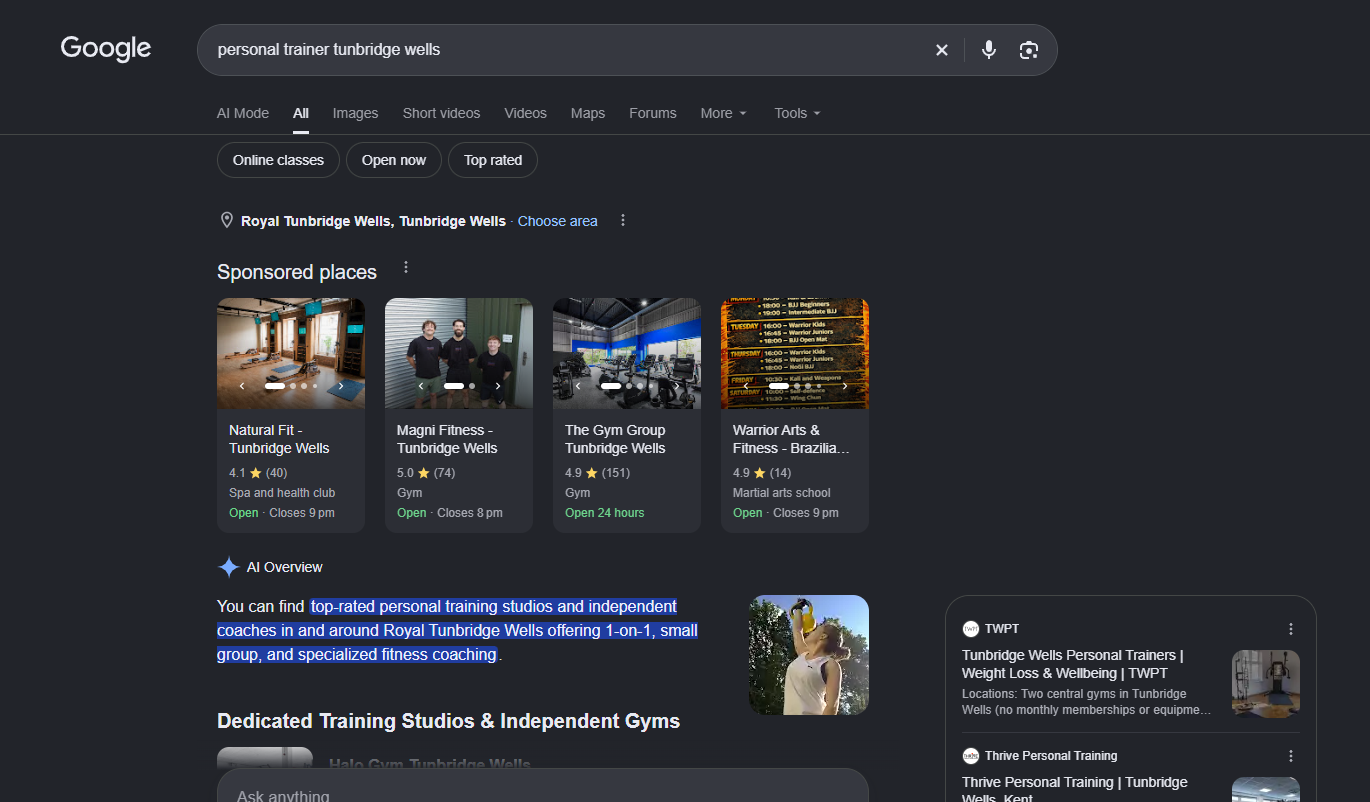
Google Ads (a type of pay-per-click advertising, often shortened to PPC) shows your gym at the top of Google when someone searches for things like "gym near me" or "personal trainer Tunbridge Wells". These people have already decided they want something. You are simply making sure they find you rather than the gym down the road.
To make Google Ads work for a gym:
- Target searches that show real intent, such as "gym membership", "trial session" or "classes near me", rather than broad terms like "fitness".
- Send people to a page that matches the search. If they searched for a free trial, land them on a trial booking page, not your homepage.
- Add location and call extensions so people can see where you are and phone you in one tap.
- Track enquiries and bookings, not just clicks.
Gracie Barra Tunbridge Wells is a good example of this approach in action. Their Google Ads bring in 40+ trial bookings per month and 10 to 15 new paying members per month, alongside a 75% reduction in cost per lead and a 20% conversion rate on their promotional website. Again, every business is different, so treat these as a guide to what is possible rather than a promise.
My Google Ads management starts from £450 per month, plus ad spend paid directly to Google.
Step 4: Show up in local search and on Google Maps
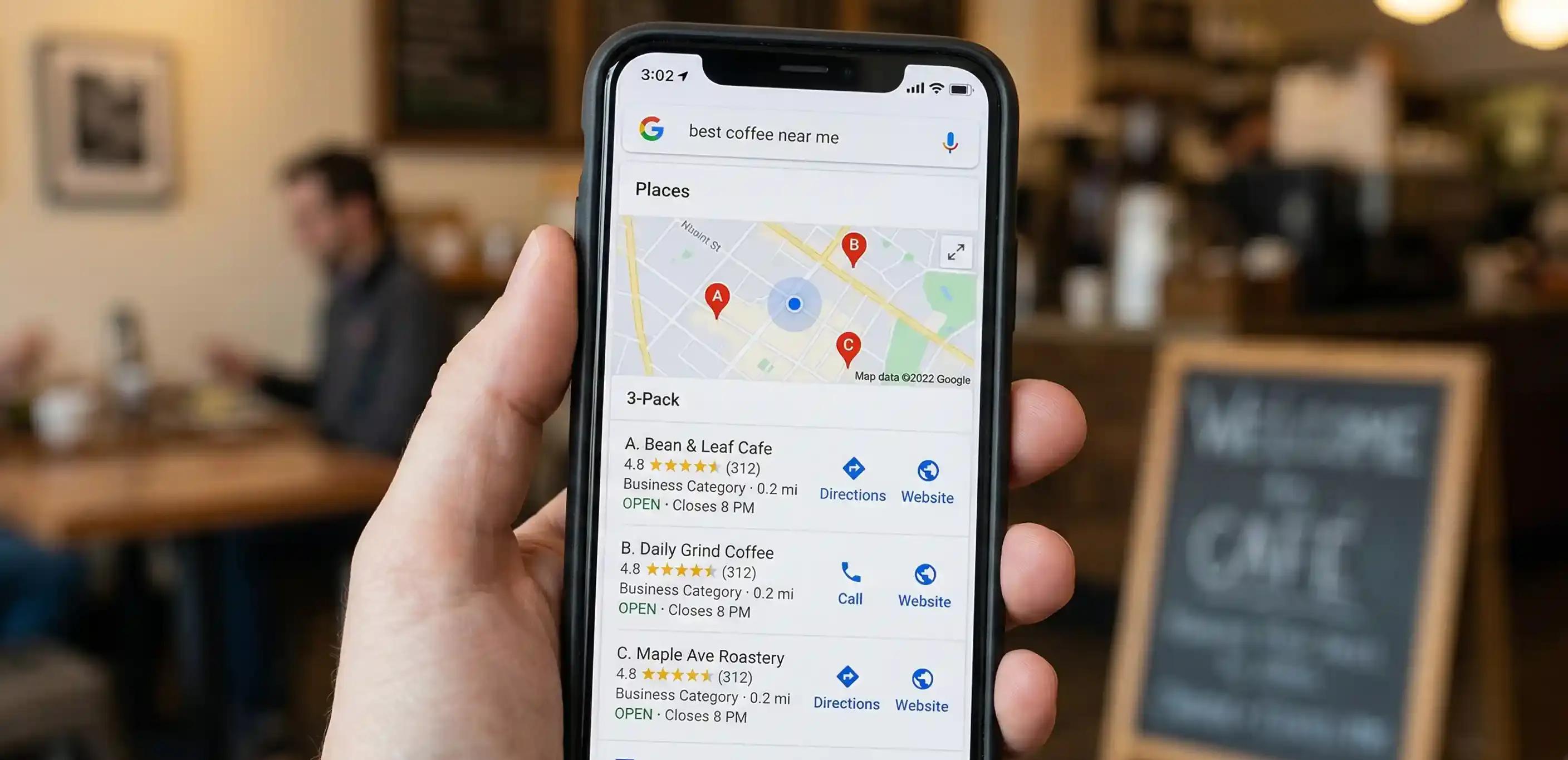
Many people choose a gym by searching on their phone and looking at the map results. If your gym is missing, half-completed or poorly reviewed, you lose people before they ever see your website.
Local SEO (search engine optimisation, meaning the work that helps you appear in unpaid Google results) for a gym starts with your Google Business Profile. That is the free listing that appears on Google Maps and in search. Make sure it has:
- The right categories, such as "Gym" and any specialisms you offer
- Accurate opening hours, address and phone number
- Plenty of recent, real photos of your space, equipment and classes
- A link to your Join Us page, not just your homepage
- Regular posts about offers, classes and events
Reviews matter just as much. Ask happy members to leave a review while they are feeling good, such as after a milestone or a great class. At Gracie Barra, a simple, consistent approach led to a 6x increase in the monthly Google review rate. If you want help with this, my Google Business Profile management starts from £150 per month.
Step 5: Build a Join Us page that does the selling
Every advert, map listing and search result should lead somewhere that makes joining easy. For most gyms, that is a dedicated Join Us page. It should answer the questions a nervous newcomer has, quickly and without scrolling through pages of text.
A good Join Us page includes:
- A clear headline and your current offer at the top
- Simple pricing, or a clear "from" price
- Photos of the real gym and real people
- A few lines of reassurance for beginners
- One short form or one booking button, and your phone number
- Opening hours, location and parking or transport details
This page also pays off in search. At Halo Gym, improving the SEO around the site led to a 265% increase in organic clicks to the Join Us page, plus an estimated 52.3% rise in organic traffic year on year, and 2 to 5 SEO-attributed membership enquiries per month. You can see how it was done in the Halo Gym SEO case study. SEO is a slower burn than adverts, but it keeps working without you paying for each click.
Step 6: Follow up fast, because speed wins members
This is the cheapest improvement in the whole article. Someone who fills in a form on a Tuesday evening is at their most motivated right then. Wait two days and they have often cooled off or joined somewhere else.
A simple follow-up routine:
- Reply within minutes if you can, by text or WhatsApp as well as email.
- Offer two specific times for a tour or trial, rather than "let me know when suits".
- Send a reminder the day before, with directions and what to bring.
- Chase no-shows politely once or twice, then stop.
If you only have a couple of staff, even an automatic first reply that says "Thanks, we will call you within the hour" helps. Halo Gym's 49% lead-to-member conversion shows what is possible when a strong offer meets a prompt response.
Step 7: Make trials and tours easy to say yes to
Gyms are a feelings business. People want to know they will fit in. A trial session or a friendly tour removes that worry far better than any advert.
- Greet them by name and introduce them to a coach or another member.
- Ask about their goals before you talk about prices.
- Let them try something, rather than just walk around.
- Finish with a simple next step, like "shall we get you set up today?" with a short-term offer if they join that day.
Gracie Barra's 40+ monthly trial bookings turning into 10 to 15 new members is a good illustration. The advert gets the booking, but the welcome gets the member.
Step 8: Launching a new service, such as group personal training
The same plan works when you launch something new alongside your standard membership. For the Halo Gym Group PT launch, we combined paid social, video, an SEO landing page and in-gym marketing. The result was 40 leads and 15 sign-ups, a 37.5% lead-to-sign-up rate. The Halo Gym Group PT launch case study shows how the pieces fit together.
The lesson is that existing members are part of your marketing. Telling the people already in the building about your new class or programme costs almost nothing and often fills the first places.
Step 9: Keep members through retention and referrals
Getting a new member costs money. Keeping one is usually far cheaper, so a bit of effort on retention makes every marketing pound go further.
- Welcome properly. A first-week check-in, a simple plan and an introduction to a few people make a big difference.
- Notice when someone goes quiet. A friendly message after two weeks of no visits can bring them back before they cancel.
- Run a referral offer. For example, a free month for a member and a friend who both join. Happy members are your best advertising.
- Ask for reviews at good moments, which feeds back into your Google Maps visibility.
If you run a boutique or small-group studio, much of this applies directly, and my fitness studio marketing page explains how I adapt it.
Step 10: Measure cost per member, not just clicks
Likes, clicks and impressions feel good but do not pay the rent. The number to watch is your cost per new member: how much you spent on marketing divided by how many people actually joined.
Here is a simple example. Imagine a gym spends £600 on adverts in a month and receives 120 enquiries. That is £5 per enquiry. If 36 of those people join, the conversion rate is 30% and the cost per new member is about £16.67. If next month the same spend brings in 150 enquiries but only 30 joins, you know the enquiries were weaker, or the follow-up slipped, even though the headline numbers looked better.
To work out the first step in that chain, see my guide on how to calculate cost per lead (a lead is simply an enquiry). Then compare it with the cost per member, and with how long the average member stays. A member paying £40 per month for a year is worth far more than the £16.67 it cost to win them.
To measure this properly you need tracking set up on your forms, calls and bookings, and a simple habit of recording who joined and where they came from. Even a basic spreadsheet is a good start.
Frequently asked questions
How much should a gym spend on marketing to get more members?
It depends on your size, your prices and how many members you want to add. A sensible approach is to start with a modest monthly ad budget, track cost per new member, and increase spend only once you can see it is paying back. Management fees and ad spend are separate, so it is worth planning for both.
Are Facebook and Instagram ads or Google Ads better for gyms?
They do different jobs. Meta Ads create interest in people who are not yet searching, while Google Ads capture people who are actively looking. Many gyms start with the one that suits their offer and budget, then add the other once the basics are working.
How long does it take to see new members from digital marketing?
Paid adverts can bring in enquiries within days of launching, though it often takes a few weeks to refine the offer and targeting. SEO and Google Maps visibility build more gradually, usually over several months. Results vary, so I would not trust anyone who promises a specific outcome.
Do I need a new website to get more gym memberships?
Not always. Often a strong, dedicated Join Us page that loads quickly on mobile and has a clear offer and form is enough to start. If your current site is confusing or hard to use on a phone, a rebuild may be worth it later.
What is a good conversion rate from enquiry to member?
It varies by gym, offer and how quickly you follow up. At Halo Gym, 49 of 100 enquiries became paying members during one campaign, but that depends on a lot of factors. A better approach is to track your own rate and improve it month by month.
Want help getting more members for your gym?
If you would like a second pair of eyes on your adverts, website, Google listing and follow-up process, I offer a free digital audit. I will tell you honestly what is working, what is not and where the quickest wins are. You can request your free digital audit and we can talk it through together.
You will work directly with me, Freya Jones, not a junior account manager. If we grow you, we grow together.
Want help putting this into practice?